
The housing market continues to navigate a complicated mix of elevated mortgage rates, slower buyer activity, limited inventory, and strong homeowner finances.
According to Compass’ August 2026 National Insights Report, mortgage rates remained near their highest levels of the year during August, contributing to softer demand. At the same time, the broader housing market continues to show resilience, particularly at the higher end of the market.
For buyers and sellers in Berkeley, Oakland, and across the East Bay, national trends provide useful context—but local market conditions can vary significantly by neighborhood, price point, and property type.
Mortgage Rates Continue to Shape the Market
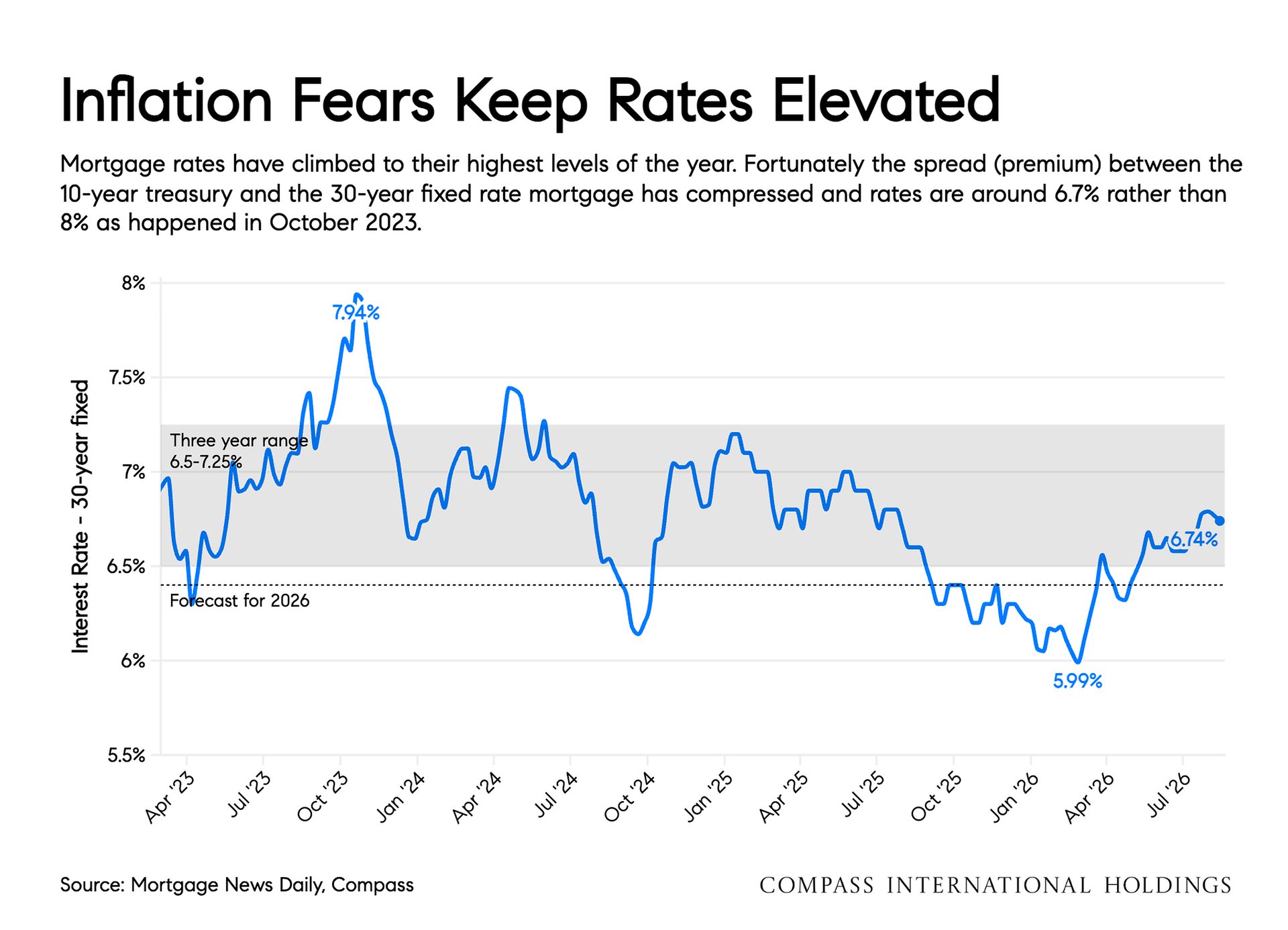
Higher borrowing costs remain one of the biggest factors affecting housing activity.
The report notes that the 30-year mortgage rate reached 6.85% on July 23 before easing to approximately 6.74%. While inflation has shown signs of easing, longer-term interest rates remained elevated through August.
For buyers, that means affordability remains closely tied to changes in mortgage rates. Even relatively small rate movements can affect purchasing power and monthly payments.
For sellers, higher rates can reduce the number of buyers able or willing to compete at a particular price point, making accurate pricing and positioning increasingly important.
Buyer Demand Has Moderated
Several forward-looking indicators point to somewhat softer housing demand.
Pending sales over the four weeks covered by the report were approximately 1% lower than during the same period in 2025. Mortgage applications, purchase credit inquiries, and pending-home activity were also showing recent declines.
Existing-home sales, meanwhile, have remained relatively subdued. Since 2023, the seasonally adjusted annual pace has averaged roughly 4.1 million sales, with July 2026 remaining around that level.
This doesn't mean demand has disappeared. Instead, buyers are operating in a market where financing costs and affordability are playing a larger role in purchasing decisions.
Luxury Real Estate Is Showing Greater Strength
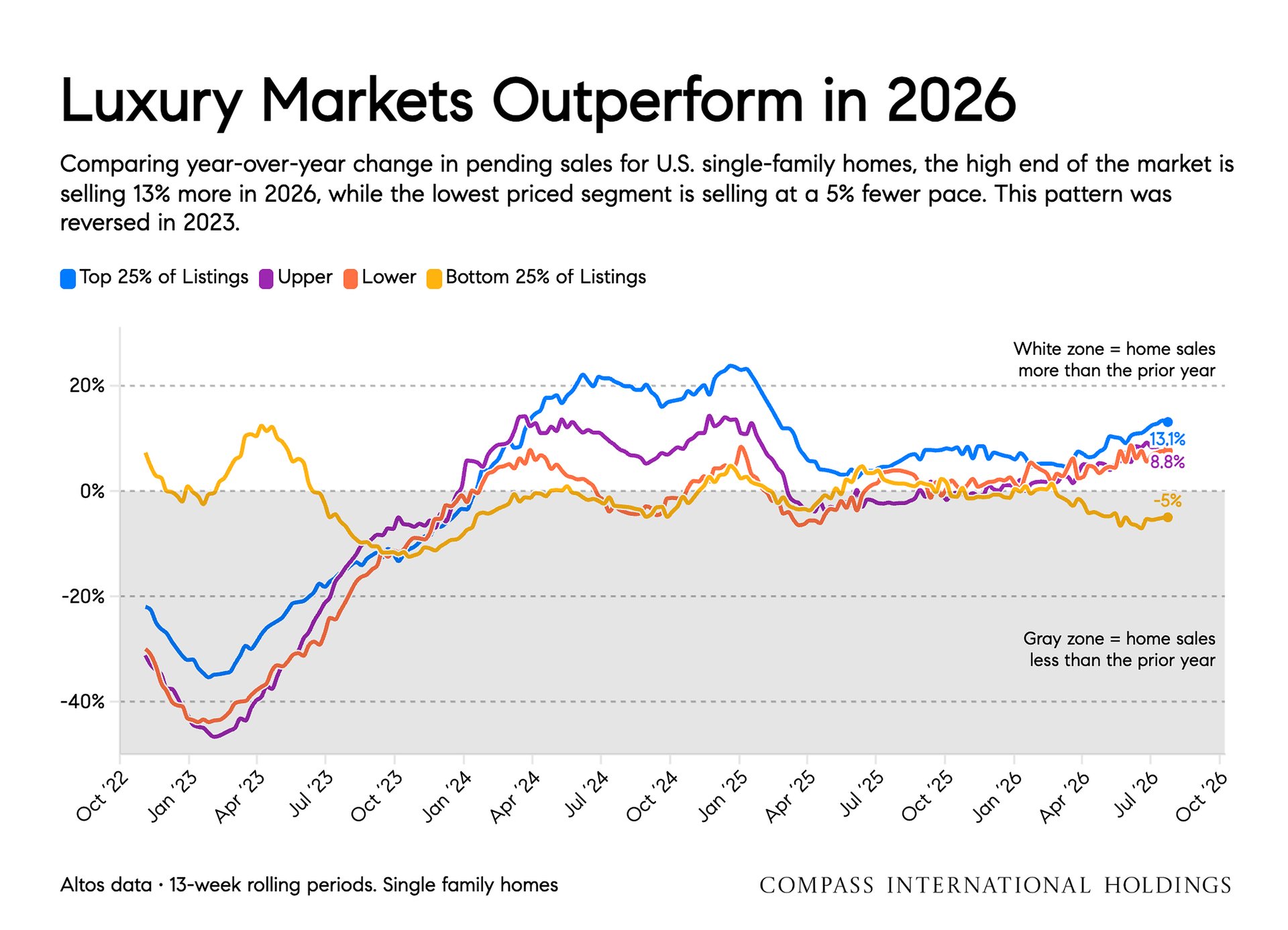
One of the more notable trends in the report is the performance of higher-priced homes.
Compass data shows that the top 25% of U.S. single-family listings were seeing pending sales approximately 13% higher year over year, while the lowest-priced segment was running about 5% below the prior year's pace.
The report connects some of this strength to the "wealth effect." With stock-market performance and business profitability remaining strong, households with significant assets may be less sensitive to mortgage-rate changes than buyers who depend more heavily on financing.
That distinction is especially relevant when looking at higher-value markets: national housing trends do not necessarily affect every price segment in the same way.
Housing Inventory Remains Constrained
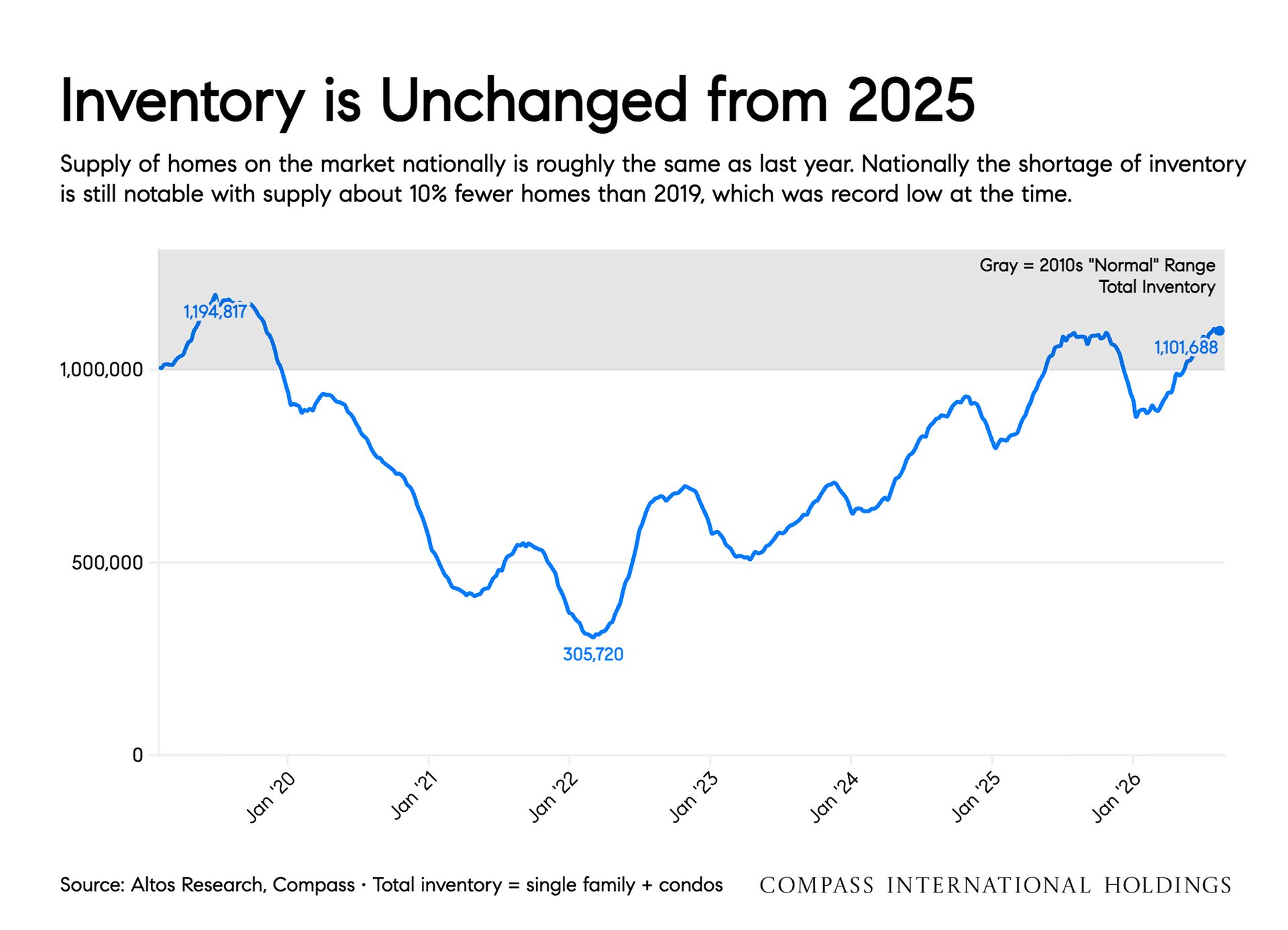
Despite softer demand, the market has not experienced a dramatic increase in homes for sale.
National inventory was roughly unchanged from 2025 and remained approximately 10% below 2019 levels, according to the report. Compass' forecast also anticipated relatively little year-over-year inventory change if current conditions persisted.
Limited supply continues to be an important part of the housing story. While buyers may have more negotiating opportunities in certain markets, the country has not experienced the kind of broad inventory surge that would fundamentally reset supply-and-demand conditions.
Home Prices Remain Resilient
Nationally, home prices were approximately 1% higher than a year earlier, although results varied substantially among individual metropolitan markets.
At the same time, active listing prices were running below recent-year levels, suggesting sellers are adjusting to today's more price-sensitive environment.
The combination reinforces an important distinction: asking-price trends and closed-sale price trends don't always move together.
Homeowners Remain in a Strong Financial Position
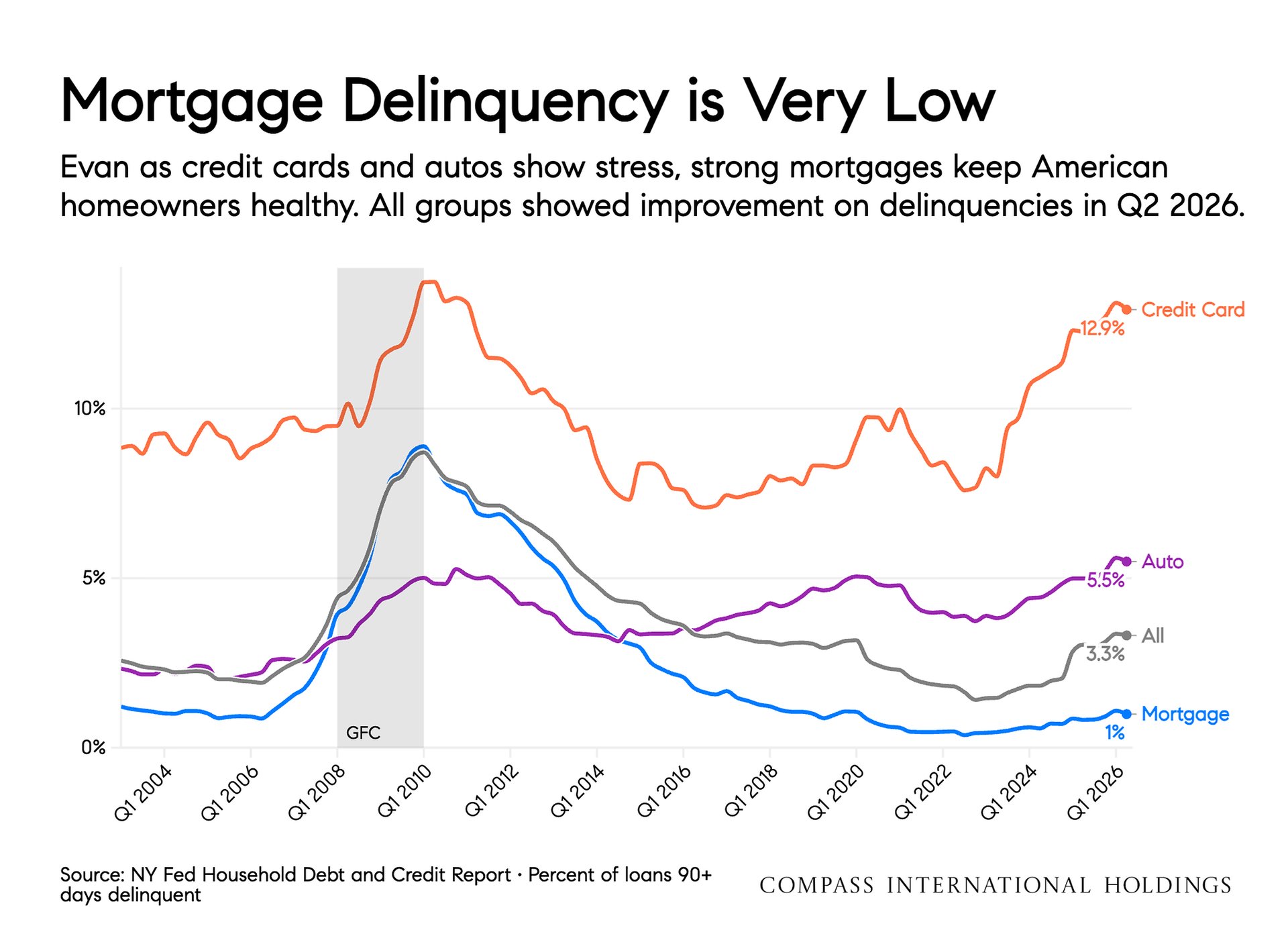
Another important difference between today's housing market and previous downturns is homeowner financial health.
Mortgage delinquency remained extremely low, and foreclosure activity continued to sit far below historical levels. The report also highlights substantial unused home-equity credit capacity, with roughly $600 billion in available credit on existing HELOCs compared with about $460 billion currently borrowed.
These conditions suggest that widespread distressed selling is not currently a major source of additional housing supply.
What Does This Mean for the East Bay?
National statistics provide the backdrop, but real estate remains highly local.
Berkeley, Oakland, and surrounding East Bay communities can behave very differently depending on neighborhood, home condition, architectural style, school considerations, inventory, and price range. A property attracting multiple offers in one neighborhood can exist alongside a home requiring price adjustments just a few miles away.
For buyers, understanding recent comparable sales and competition within a specific neighborhood is more useful than relying solely on national headlines.
For sellers, today's market places greater importance on pricing, preparation, presentation, and understanding what buyers are actually paying for comparable homes.
Thinking about buying or selling in Berkeley, Oakland, or the East Bay? We can help you understand how these broader trends translate to your specific neighborhood, property, and plans.
Nasi White + Soulmaz Panahi
Compass | Berkeley & East Bay Real Estate
Source: Compass National Insights Report, August 2026. National market statistics may not reflect conditions in individual East Bay neighborhoods.